Titan War
- 3.1
- Rating
- 1.00M
- Installs
- Free
- Price

 Analysis by App-foxy
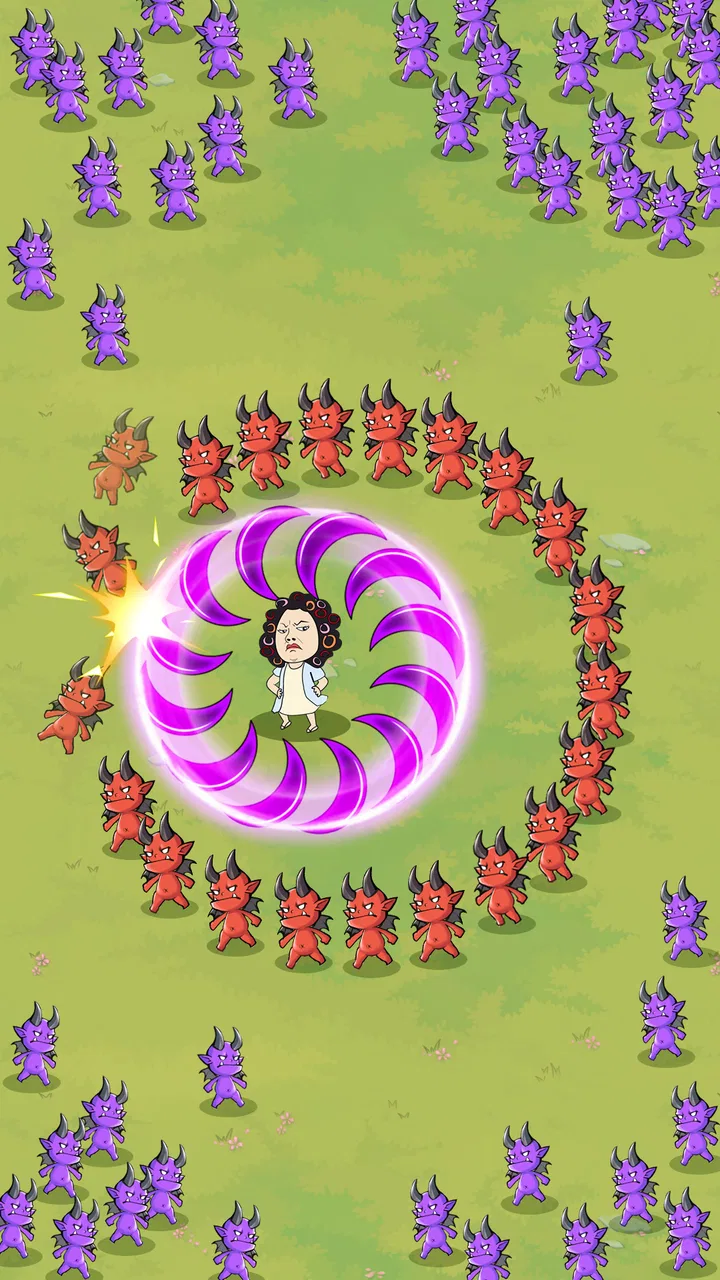
Titan War is a free card game from Glacier entertainment that takes a very direct approach: improve your blade, send it into battle, and keep harvesting enemies as you work through its repeatable action loop. I found it easy to understand within a few minutes, but the more useful question is whether that simple loop has enough depth to hold your attention after the first sessions. My answer is mixed. It works well as a quick, low-commitment game for short breaks, while players looking for a genuinely strategic card experience may reach its limits sooner.
The game is available to players rated Everyone, runs on Android devices using version 7.0 or later, and is free to start. Its current version is 1.0.98. The audience is already fairly large, with over a million installs, although the average rating sits at 3.0 from around 8.8 thousand ratings. That combination tells me to approach it with realistic expectations: Titan War has found plenty of curious players, but it is not a universally polished favorite.
How the basic battle loop feels in everyday play
My first sessions followed a simple rhythm. I entered a battle, watched the action unfold, collected the result, and looked for the next useful blade improvement. The appeal is immediate because there is very little setup between decisions. I do not need to learn a complicated deck-building language before playing, and the central goal is always visible: make the weapon stronger so the next group of enemies becomes easier to handle.
You May Also Like

 Blood Strike: 2.5 Anniversary
Blood Strike’s Loadouts Turn Every Drop Into a Tactical Gamble
A close look at Blood Strike’s custom loadouts: how fast access to signature weapons reshapes its battle royale rhythm, rewards preparation, and narrows the gap between fights.

 Pandora - Music & Podcasts
Pandora’s Music Is Easy to Start, but Harder to Recover
Pandora’s strength is its low-effort path from a seed to a station. Its weak spot is how much confidence it asks you to place in connection, setup, and quiet recovery.

 8 Ball Pool
 Is Built on Rivalries, Rematches, and Routine
A close look at the rivalries, rematches, shared routines, and unanswered safety questions that turn a quick pool match into a persistent mobile community.

 Samsung Music
’s Quiet Strength Is Playing What You Already Own
Its reach comes less from spectacle than from dependable access to a personal library. That simplicity is both the app’s strongest retention engine and its ceiling.

 AccuWeather: Weather Radar
AccuWeather Review: A Quick, Clear Forecast for Everyday Decisions
For everyday plans, the best forecast is the one you can understand quickly. AccuWeather makes rain timing, radar, and local conditions easy to act on, with a few trade-offs.

 Hill Climb Racing
Why Hill Climb Racing Still Turns Crashes Into One More Run
A tiny car, a bumpy hill and one more upgrade: Hill Climb Racing keeps resurfacing because its simple chaos makes every near-miss feel personal.
More From Our News Desk



That straightforward design makes the game particularly suitable for small pockets of time. I can imagine opening it while waiting for an appointment, during a short commute, or between household tasks. A quick session does not demand the same concentration as a long strategy match. If I only have a few minutes, the upgrade-and-battle rhythm gives me a clear task instead of asking me to remember a large campaign plan.
The card-game label is important, but Titan War does not feel like a traditional tabletop card game in the way a collectible card battler does. I would not approach it expecting long turns, elaborate card combinations, or a carefully constructed competitive deck. Its card identity is tied more closely to progression and combat presentation. The main satisfaction comes from improving offensive power and seeing that improvement matter against enemies.
That distinction helps explain who will enjoy it. Players who like incremental progress, short encounters, and visible upgrades will probably understand the attraction quickly. Players who mainly want bluffing, resource denial, or deep hand management may find the experience too focused on forward movement. I would compare it less with a serious competitive card table and more with a lightweight mobile battle game that uses card-style presentation and progression.
One habit made my sessions feel less wasteful: I stopped treating every reward as an invitation to upgrade immediately. Instead, I first considered what was blocking progress. If ordinary enemies were already falling comfortably, spending resources on a small improvement did not change much. I preferred to save enough for a more meaningful blade increase, especially when the next encounter felt noticeably tougher. This is not a complicated trick, but it prevents the common mobile-game mistake of scattering improvements across several small choices without a clear purpose.
The game is also easier to judge when I separate two kinds of enjoyment. There is the pleasant moment-to-moment satisfaction of making the blade stronger, and there is the longer-term question of whether the next improvement feels different from the previous one. Titan War handles the first part well enough for casual play. The second depends on how much repetition you tolerate. If repeating similar battles feels relaxing, the loop can remain comfortable. If repetition feels like a chore, the lack of a deeper change in routine becomes more noticeable.
Settings and session habits that make the game easier to manage
I recommend checking the available settings before settling into a routine, not because Titan War presents itself as a heavily configurable game, but because small choices can affect how comfortable repeated sessions feel. Look for the basic audio and notification controls first. I prefer lowering or muting sound when playing in public, and I avoid unnecessary interruptions when I am using the game as a short break rather than as my main activity.
It is also worth checking whether the game is behaving comfortably on your particular phone before committing to longer play. The minimum operating-system requirement is Android 7.0, so compatibility is broad, but compatibility alone does not guarantee that every device will feel equally smooth. I would begin with short sessions, watch battery use and heat, and then decide whether it suits longer stretches. That is a more practical test than assuming a modest-looking card game will behave identically on every handset.
Because the game is free, I would also make a personal spending rule before upgrades start feeling urgent. The listed in-app purchase range runs from $0.99 to $99.99 per item. That is a very wide spread, so I would treat optional purchases as a boundary to manage rather than as a normal part of progression. Playing without spending first gives a clearer idea of whether the core loop is enjoyable on its own.
My preferred setup is simple: notifications off unless I specifically want reminders, sound adjusted to the environment, and a short session limit when I am testing whether the game is still fun. This matters because incremental games can turn a few minutes into a longer routine without offering much new decision-making. A timer or a natural stopping point helps me judge the game based on enjoyment rather than momentum.
Another useful habit is to avoid upgrading while distracted. Since the central decisions are uncomplicated, it is easy to tap through rewards automatically. I found that paying attention for a moment before confirming an improvement made the progression feel more deliberate. If the game offers several possible actions on a given screen, I would read each one rather than choosing the first highlighted option. That approach does not require advanced knowledge, and it reduces the chance of spending a limited resource simply because the interface made the choice convenient.
There is a practical reason to keep expectations modest around settings. Titan War is built for accessibility rather than for a large control panel. I would not download it specifically because I want extensive customization, controller configuration, or a detailed performance menu. Its strength is getting into a battle quickly. The settings are there to make that routine more comfortable, not to transform the game into a highly personalized simulator.
Faster patterns for short sessions and steadier progress
The fastest way I found to play was to give each session one purpose. Sometimes that purpose was simply collecting enough progress to reach the next blade improvement. At other times, I focused on testing whether a particular upgrade noticeably changed the next battle. This prevented me from drifting through repeated encounters with no idea what I was trying to learn or accomplish.
A useful pattern is to check the result of an upgrade immediately, rather than assuming that a higher number automatically means a better session. If the next group of enemies still takes roughly the same effort, I would continue saving resources instead of making several minor improvements in succession. This creates a clearer relationship between the decision and the outcome, which is especially valuable in a game whose main pleasure comes from progression.
I also recommend using natural pauses as checkpoints. After a battle or reward screen, I would ask three quick questions: did the blade improvement change the pace, am I spending because I need to or because I am impatient, and do I still want another round? These questions sound basic, but they help keep Titan War in its best role as a compact break. They also make it easier to stop before the repetition becomes tiring.
For a daily routine, I would not open the game every time I have an idle moment. I would choose one or two predictable windows, such as after lunch or while waiting for transport, and keep the session contained. This is better than allowing the game to become a constant background task. Titan War is most pleasant when I decide to play it; it is less appealing when I feel obliged to check it repeatedly.
The same approach helps with purchases. If progress appears slower, I would first change my play pattern: save for a larger upgrade, stop wasting resources on marginal improvements, and test whether a different battle rhythm works better. Only after that would I consider an optional purchase. Since individual in-app items can cost as much as $99.99, impulse decisions are not a small concern. The game is free to download, but that does not mean every progression shortcut is inexpensive.
One trade-off is that efficiency can reduce some of the casual charm. If I optimize every action, the game becomes a checklist: collect, upgrade, battle, repeat. If I play more loosely, the experience feels lighter but may produce slower progress. I think the best balance is to optimize resource spending while keeping the session length relaxed. That preserves the satisfying part without turning a simple mobile game into administrative work.
Where the progression reaches its limits
Titan War’s biggest limitation is also the source of its accessibility. The game makes the next action obvious, but obvious actions do not always create memorable decisions. I would not recommend it to someone who wants a card game with a large strategic vocabulary. There is no reason to expect the same kind of mental challenge found in games centered on deck construction, counterplay, or competitive matchmaking.
The rating of 3.0 from around 1.6 thousand reviews reinforces my cautious view. I would not treat that number as a verdict on every device or every player, but it does suggest that the experience has not satisfied everyone consistently. For me, the likely friction points are the repetitive structure, the possibility that upgrades may feel incremental, and the gap between a free starting point and expensive optional items.
That last point deserves attention from parents and younger players even though the content rating is Everyone. An age rating describes suitability of content, not spending discipline. If children use the device, I would set purchase controls before handing over access. The game’s accessible presentation makes it easy to start, while the in-app purchase range means adults should still supervise how optional spending is handled.
I would also skip Titan War if I wanted a game that rewards long planning sessions. Its design is better for immediate feedback than for building a multi-hour strategy. A traditional card battler is a better choice when I want to study a deck, anticipate an opponent, and feel that a clever sequence changed the match. A larger role-playing game is better when I want exploration, story, and a world that evolves around my decisions.
On the other hand, those alternatives can be demanding. They may require longer uninterrupted sessions, more rules to learn, or a larger commitment to understand their systems. Titan War wins by reducing that burden. I can pick it up without preparing a deck or remembering a complicated campaign. Its real strength is convenience, not strategic depth.
Another limit is replay value. The upgrade loop gives me a reason to continue, but it does not automatically create variety. If the battles, rewards, and decisions begin to feel interchangeable, the game becomes something I open out of habit rather than interest. My solution is to treat it as a secondary game: something to keep available for short breaks, not the only title on my phone.
The developer, Glacier entertainment, has positioned the experience around a clear fantasy of improving a weapon and cutting through enemies. That focus is easy to understand, but it also means the game has less room to surprise me. I would be comfortable recommending it to someone who actively likes repetitive progression. I would be more hesitant with a player who needs frequent new mechanics, elaborate events, or a strong narrative reason to continue.
Who should install it, and who should look elsewhere
I think Titan War is a reasonable fit for casual players who want a free card-themed game that can be understood quickly. It is especially suitable for someone who enjoys watching a weapon become stronger and prefers short battles over complex planning. The Everyone rating also makes it approachable for a broad audience, although spending controls remain sensible for shared devices.
It can work well as a companion game. For example, I could play a few battles while waiting for a friend who is running late, make one meaningful upgrade, and close it without losing the thread of a story or a competitive match. That kind of everyday scenario is where the design makes the most sense. It fills a small pause without demanding that I reorganize my day around it.
I would not choose it as my main game if I wanted a rich card strategy experience. Players who enjoy building specialized decks, experimenting with combinations, or competing against human opponents should look toward a more traditional card battler. Players who dislike in-app purchases should also be cautious, not because spending is mandatory for the basic download, but because the available item range makes it important to maintain a firm personal limit.
Storage and device compatibility are not the only practical questions. I would also ask whether repeated upgrade screens sound enjoyable to you. If the answer is yes, Titan War has a clear chance of fitting your habits. If you need each session to introduce a new location, story beat, or tactical puzzle, the simple loop may feel thin very quickly.
The current version, 1.0.98, is the version I would use when judging the present experience. I would still keep the game updated through the normal store process, since mobile titles can change over time. But I would not install it expecting an entirely different genre from what appears in the opening sessions. The core appeal remains the same: quick combat, blade improvement, and repeated enemy harvesting.
My verdict after settling into the routine
After using Titan War as a short-session game, I see it as an uncomplicated, accessible option rather than a standout card classic. The first few battles are easy to understand, and the blade-upgrade loop gives immediate direction. I appreciate that I can begin playing without a long tutorial or a large collection of systems competing for attention.
Its weaknesses become clearer with time. Progress can feel repetitive, the strategic ceiling is modest compared with deeper card games, and the wide in-app purchase range means I would keep spending firmly under control. The 3.0 average from around 8.8 thousand ratings is consistent with that balanced impression: there is a playable idea here, but it is not polished or varied enough to satisfy everyone.
My recommendation is therefore specific. Try it if you want a free, lightweight battle game for spare minutes and you enjoy incremental weapon improvements. Give it a short test without spending, use a deliberate upgrade habit, and decide whether the repeated encounters remain satisfying. Skip it if your priority is deep deck strategy, story-driven progression, or a game that constantly introduces new ways to play.
For me, Titan War is best kept in the category of an easy pick-up-and-play card game. I would recommend it to a friend who wants something simple for waiting rooms and brief breaks, with the warning that its charm depends heavily on enjoying repetition. It does not need to become a daily commitment to be worthwhile; in fact, keeping sessions short is probably the best way to get the most from it.
In the end, I like the clarity of its idea more than the depth of its execution. The game knows what it wants me to do, and that makes it approachable. Whether that is enough depends on your expectations. If a stronger blade and another quick battle sound like a satisfying use of a few spare minutes, Titan War is worth trying for free. If you want every decision to carry lasting strategic consequences, another card game will serve you better.
FAQs for Titan War
01What is the main objective of Titan War?
Titan War is a strategic role-playing game where players build and command an army of heroes to defeat monstrous titans. The main goal is to strategically manage resources, upgrade your heroes, and conquer various challenges. Players must outsmart opponents, using tactical planning to progress through different levels and unlock rewards.
02Is Titan War free to play?
Yes, Titan War is free to download and play on both Android and iOS platforms. However, the game offers in-app purchases that allow players to buy additional resources, special items, and exclusive content. While these purchases can enhance gameplay, they are not necessary to enjoy the core experience.
03What are the system requirements for Titan War?
Titan War requires a stable internet connection and a device that runs on Android 5.0 or higher, or iOS 10.0 or later. These requirements ensure smooth gameplay and access to all features. It’s recommended to have sufficient storage space and RAM for an optimal gaming experience without lag or crashes.
04Can I play Titan War with friends?
Yes, Titan War includes multiplayer features that allow you to team up with friends or other players worldwide. You can form alliances, participate in cooperative battles, and compete in global leaderboards. This social aspect enriches the gameplay by encouraging strategic collaboration and friendly competition.
05How do I get updates for Titan War?
To receive updates for Titan War, ensure that your device's automatic updates are enabled for apps. Regular updates are released to introduce new content, features, and improvements. Users can also manually check for updates via the Google Play Store or Apple App Store to ensure they have the latest version.
Pros
- Engaging storyline with immersive plot twists.
- Stunning graphics enhance the gaming experience.
- Varied character classes offer unique gameplay.
- Real-time PvP battles add competitive excitement.
- Regular updates keep content fresh and exciting.
Cons
- In-app purchases can be quite expensive.
- Requires a stable internet connection to play.
- Some bugs may affect gameplay performance.
- High system requirements on older devices.
- Limited offline functionality for solo play.

Titan War
Gallery